
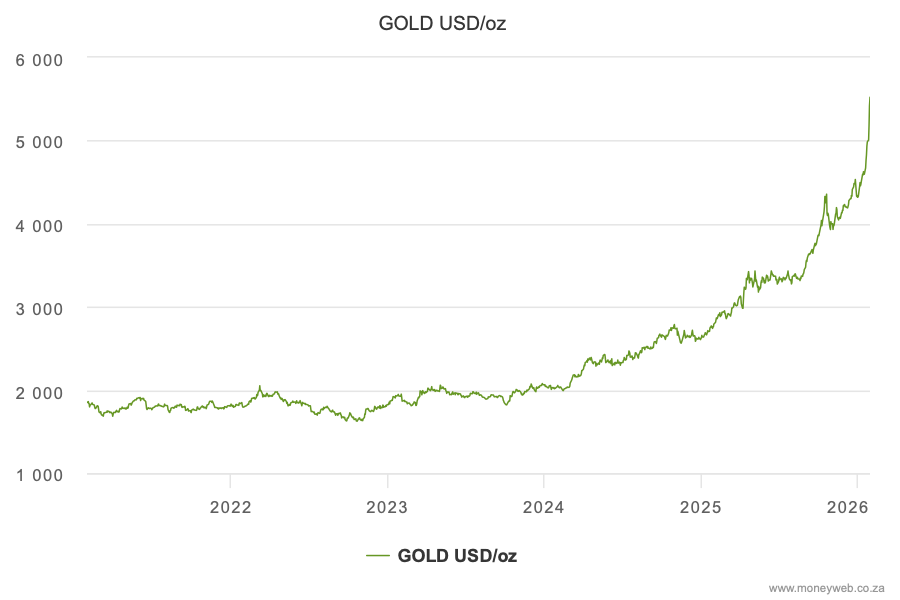
We have seen the performance trends from last year carrying through into this year and as far as precious metals are concerned, even escalating. If you look at the performance graph of Gold over the last five years, you will see it going parabolic over the last few months as the US$ weakened further.
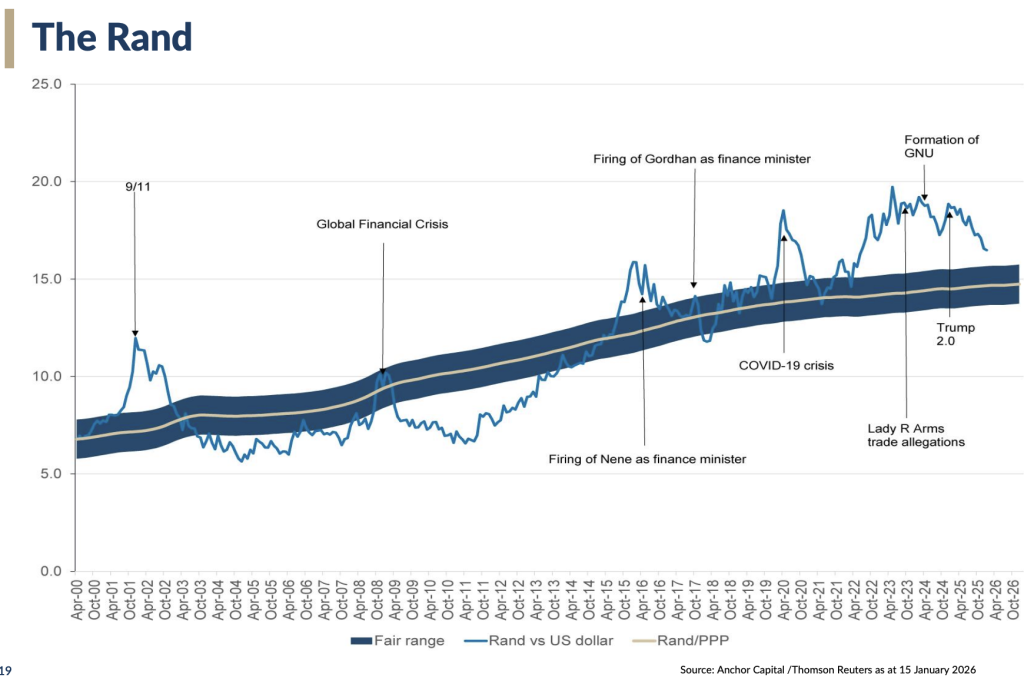
The weaker dollar is not so bad for the US because it makes their exports cheaper and Donald Trump recently commented that he is not unhappy with the current situation. The slide borrowed from a recent Anchor presentation, shows the strengthening of the rand against the US$. According to them it should settle at around R15.75 to the $, but if it gets below R15, if moves into the territory where it can be called overvalued.
The majority of investment mistakes are made when the focus is on the short term, rather than the longer term.
Getting the entry and exit points right on average is a bit like gambling. How many times have you entered a position after it has run up a lot, only to catch the start of a downward slide and selling out at a loss, just to see it go up again after you have sold? Another investment mistake many people make is the level of confidence they have in their views. The younger you are, the more conviction you can have in your trades because you can give it time to run through any short to medium term slumps. As you near retirement, you have to be a bit more skeptical about your ability to make the right investment call because even if you will be proven right over the longer term, the reality is that your requirements do not allow you to wait that long.
The best way to manage your investment portfolio as you get older, is to make slow, gentle changes to it over time. As one part of your portfolio goes up, take some profits and leave the underperforming parts to recover. Building up some cash or low volatility assets when things have been going very well, is not such a bad thing, knowing that the next 10% to 20% drawdown will come at some stage.
One of the most important parts of creating wealth is to formulate a plan and then to focus on realizing it. Don’t get distracted by what your neighbour is doing, or what your relative performance is. When your opponent has an injury in tennis, there is a tennis saying that goes “Don’t play the injury, stick to your gameplan”. This is pretty much what we have to do in our investment portfolios as well.