
As an investor, you should not become emotionally involved in any region, country or sector. Be impartial and adjust your portfolio based on fundamentals over the longer term and sentiment over shorter periods. We have experienced increasing tension between East and West over the last five years or so, resulting in, e.g., trade and currency wars between predominantly China and the USA. These are the two biggest economies in the world and also the leaders in the rollout of the AI revolution. South Africa is politically very much on the side of China but fortunately we have a democracy and are allowed to invest our money anywhere in the world. If you chose to put your money where our political leaders have their allegiances, you would have a big chunk of your capital invested in China, and then the following return graphs will make you cry.
To give you an idea of the returns over the last five years, we use the Satrix MSCI ETF data. The best performer was the USA technology index called the Nasdaq, followed by the S&P500 index. The bottom line was the Chinese index.
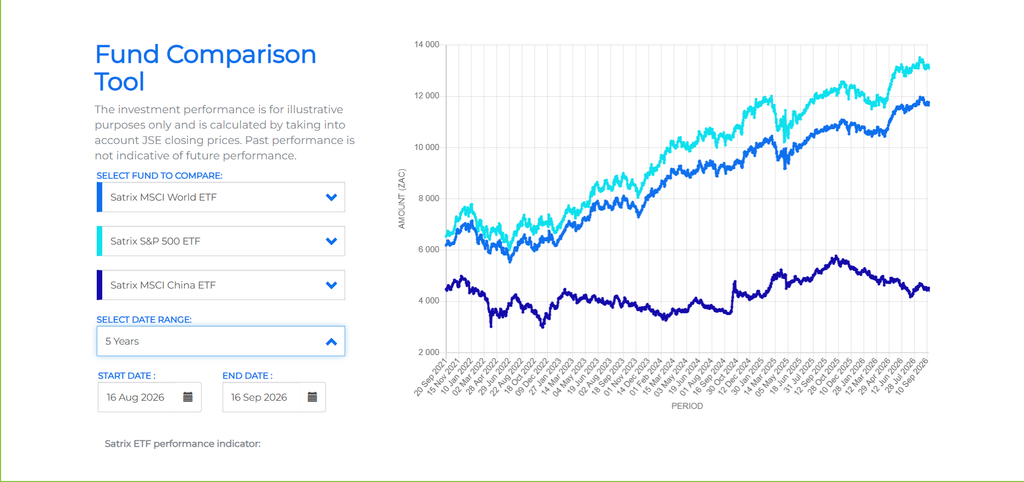
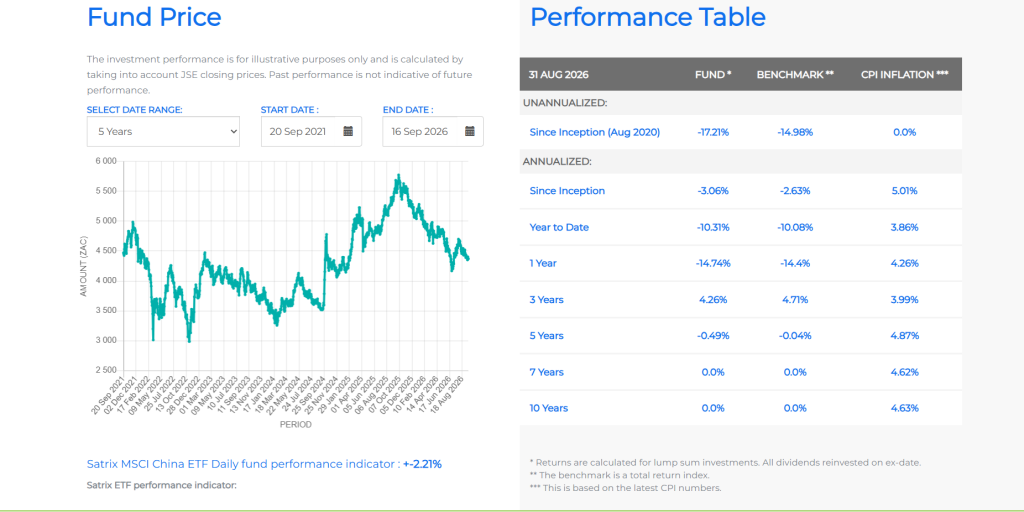
To put the Chinese returns into perspective, you would have lost money every year for the last five years on this investment compared to a 15% return in US$ if you chose the S&P500 index.
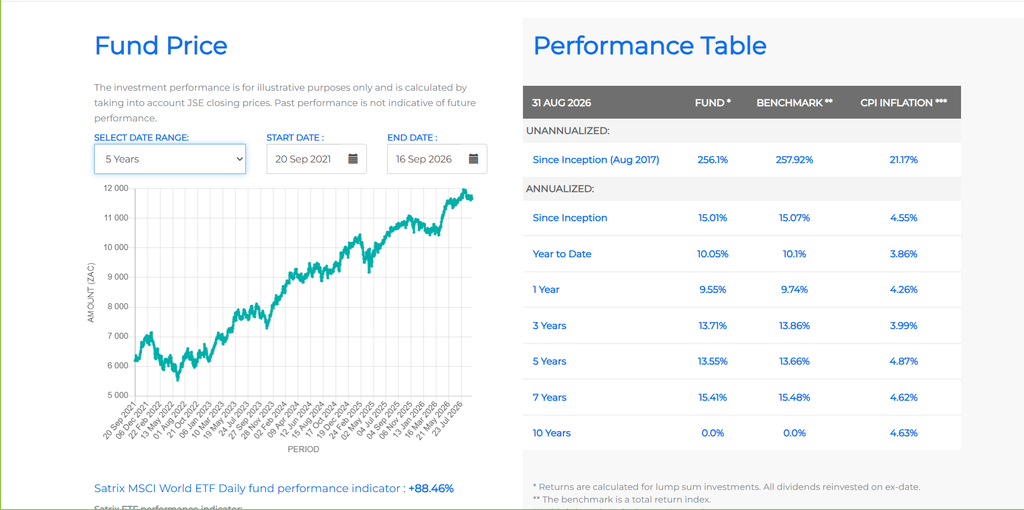
Your underperformance was not only against the USA, it would have been as bad against the MSCI World index which gave you 13.5% return over the last five years.
To understand the underperformance of the Chinese index, you have to look at some critical factors:
- Regulatory Crackdowns and Governance Shifts: Starting in 2020–2021, regulatory crackdowns targeted high-growth sectors such as big tech (e.g. Alibaba, Tencent) and private education. Priority shifted from prioritizing shareholder profit toward broad policy mandates (such as “Common Prosperity”), eroding foreign investor confidence and driving down valuation multiples.
- Property Sector Crisis: China’s prolonged real estate slowdown – evidenced by developers defaulting on debt – suppressed consumer confidence and local economic momentum. Property historically made up a massive share of domestic household wealth, leading to weak domestic consumption.
- Geopolitical Tensions: USA vs. China trade policies; semiconductor export controls; and foreign capital restrictions caused foreign institutional investors to demand a higher risk premium or pull funds entirely, placing downward pressure on stock prices.
- Index Composition Differences: The S&P500 and MSCI World benefited heavily from a massive rally in major U.S. tech and AI-adjacent stocks, which delivered high earnings growth. In contrast, Chinese indexes carry heavy weights in state-owned enterprises (SOEs) that prioritize public stability or national development over returning cash to shareholders.
One thing that is very clear from these results is the loss of confidence in the state-controlled investment environment in China compared to the free-market principles in the U.S. environment. Make no mistake, there are some very powerful companies in China which would give you spectacular returns from their current levels if Xi Jinping should become investor friendly.